How to choose the right bed for your dog (not a size too small)
The most repeated complaint about dog beds is that they arrive smaller than expected. How to measure your dog curled up, not standing, and what else matters besides size.
Short answer
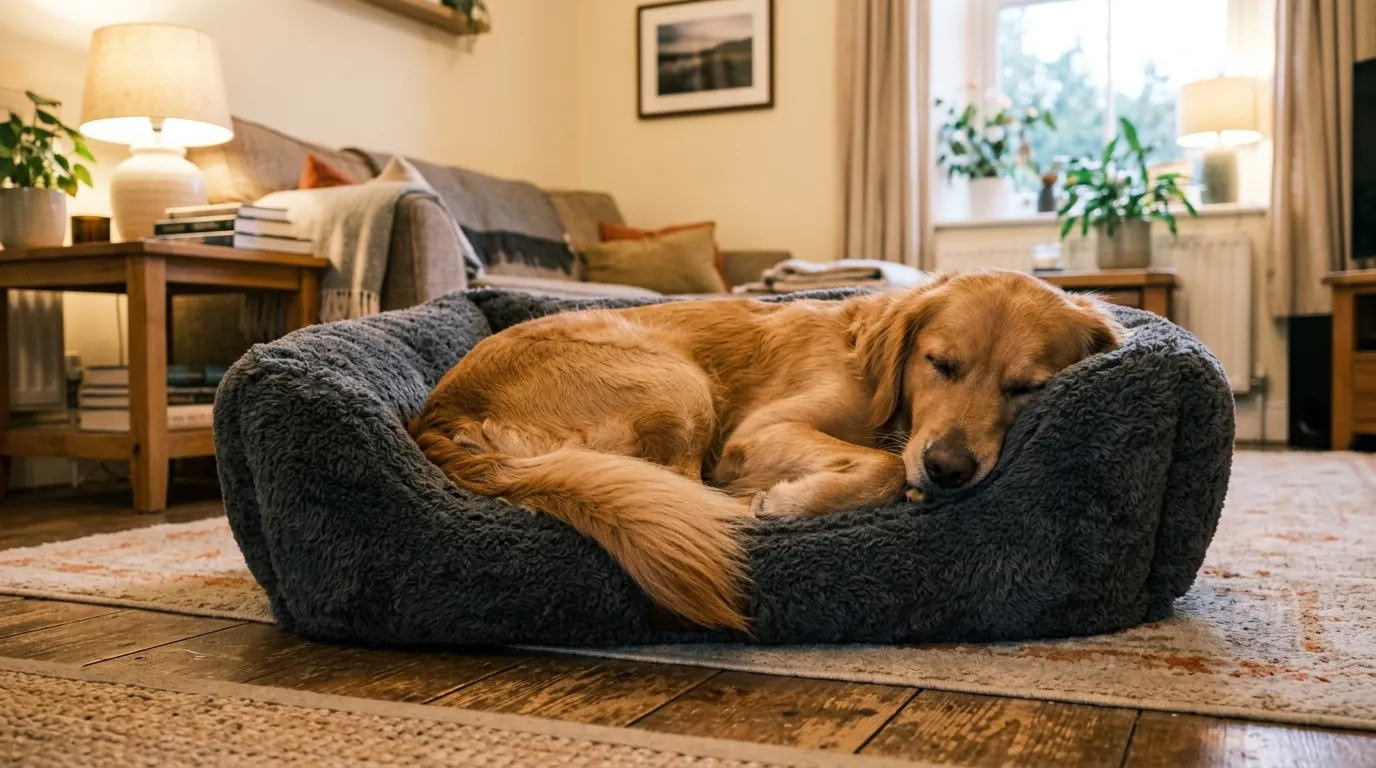
The most common mistake when buying a bed is measuring the dog standing up, or using the breed's nominal size, instead of measuring it curled up, which is how it sleeps most of the time. A small bed doesn't just feel cramped: it reduces deep rest if the dog can't fully settle in. Size matters more than brand or material.
When a bed “arrives small,” it’s almost never the seller’s mistake: it’s a measuring mistake. Most size charts are made for a dog curled up in sleeping position, not for a dog standing up or its nominal breed weight.
The mistake of measuring standing up
A curled-up dog takes up a different diameter than its standing height would suggest. A medium dog that’s 45 cm tall standing up might need a bed diameter of 60 cm or more once curled up, because the body compresses into a circle, not a straight line.
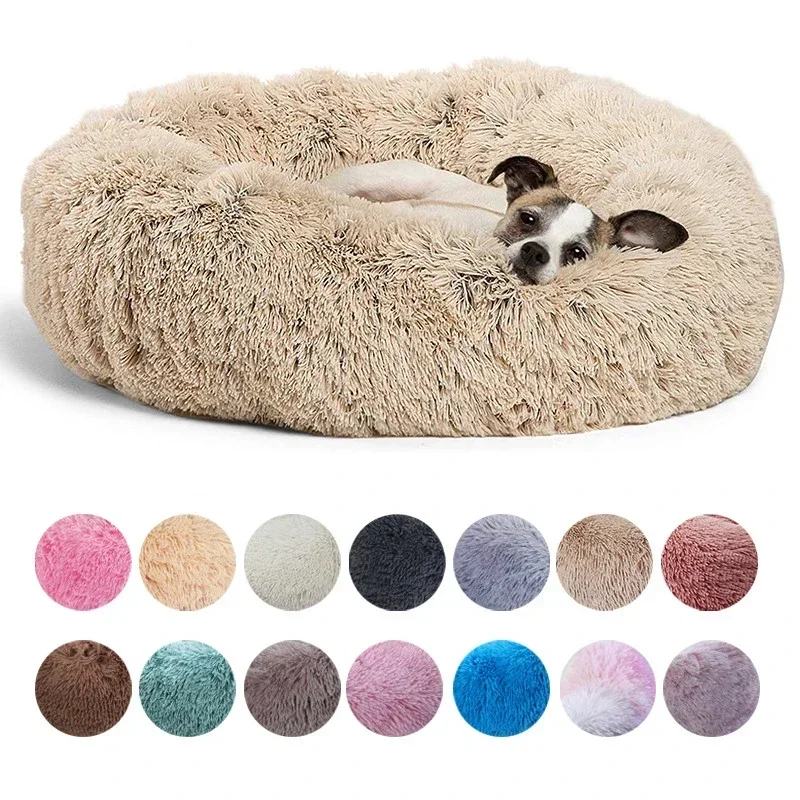
Round plush bed for dogs and cats, 6 sizes (40-90 cm)
What to look for: A round bed with a raised plush rim, designed for dogs that sleep curled up. Size is what goes wrong most often: measure your dog lying down and curled up before buying, not standing, because the most repeated complaint in reviews is that it arrives smaller than expected.
-
 View on AliExpress Ships internationally · checked on 2026-08-30
 -
 View on Mercado Libre Available in Chile · checked on 2026-08-27
How to measure correctly before buying
- Watch your dog asleep in its usual posture, generally curled up with the tail covering the muzzle.
- Measure the diameter of that shape, from one end of the curled body to the other.
- Add a 10 to 15 cm margin, so it can partially stretch out without ending up outside the rim.
- Compare against the bed’s size chart, not its breed’s nominal size.
What else to check, besides size
What to prioritize based on the dog
| If your situation is… | Works well | Better avoided |
|---|---|---|
| A dog that sleeps tightly curled, seeking containment | A round bed with a raised plush rim | A flat mat with no rim |
| An older dog or one with arthritis | A base with higher-density foam, not just soft filling | Filling that flattens quickly and loses support |
| A dog that gets wet often (yard, beach) | A removable, machine-washable cover | Beds with no removable cover: hard to wash, build up odor |
| A house that gets hot in summer | Breathable material, not dense plush year-round | A single thick plush bed for every season |
An honest limit on materials
No bed, however good, fixes an existing orthopedic problem. If your dog has hip dysplasia, diagnosed arthritis, or trouble getting up, the choice of bed becomes a matter of clinical guidance on firmness and support, not just comfort preference.
Frequently asked questions
How do I measure my dog to pick a size?
With the dog lying curled up in its usual sleeping posture, measure the diameter of that curled shape and compare it to the bed's size chart, not the dog's standing length.
Why do so many reviews say the bed arrived small?
Because most buyers pick the size based on weight or nominal breed size, not an actual measurement of the dog curled up, which is usually larger than expected.
Does the raised plush rim do anything besides look nice?
Yes: it gives head support and a sense of containment, similar to what dogs seek when they curl up against furniture or a wall.
How often should the bed be washed?
Ideally every 1 to 2 weeks, or sooner if the dog had fleas, got wet, or there's a lingering smell. Check that the cover is removable and machine-washable before buying.