How to trim your pet's nails without fear (or blood)
The most common mistake is cutting too close to the quick, the blood vessel line inside the nail. How to spot it, which tool to use, and what to do if it bleeds anyway.
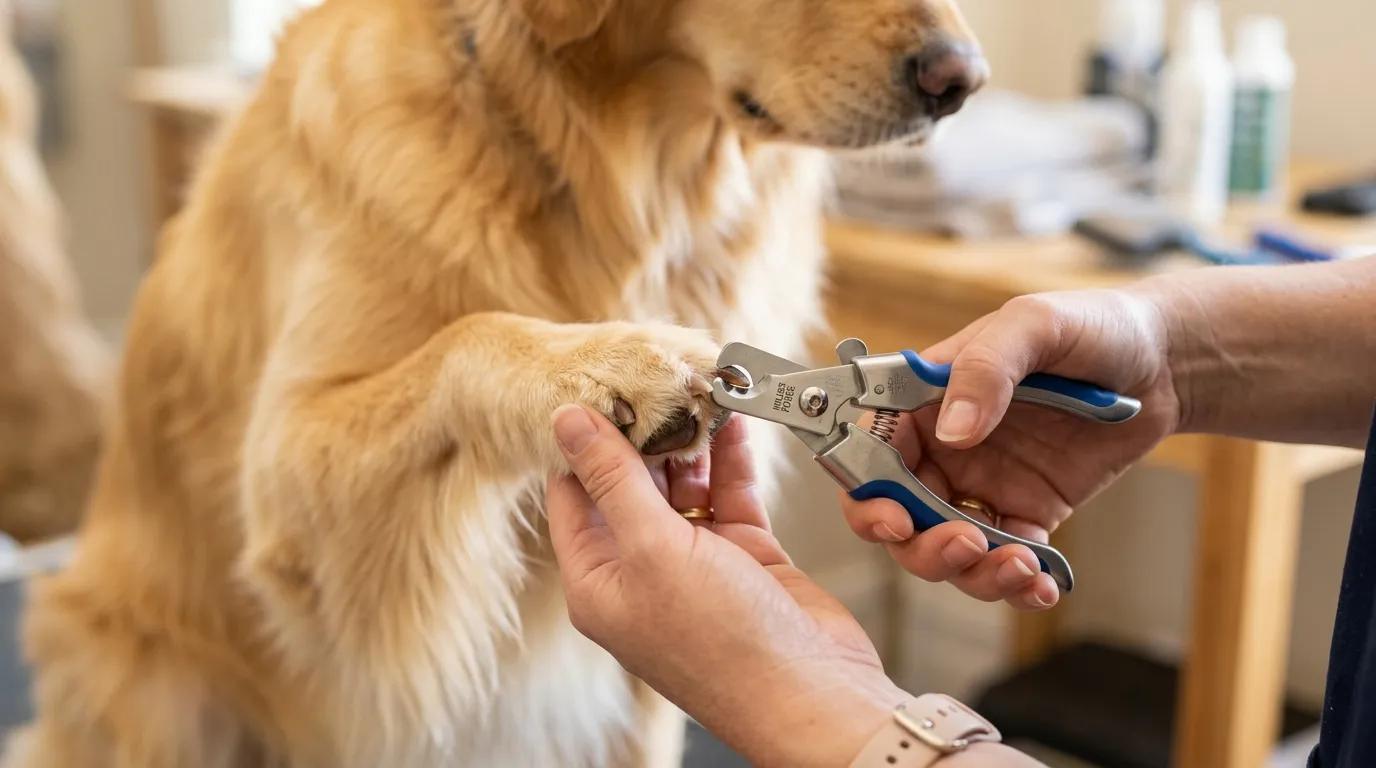
Short answer
Fear of nail trimming almost always comes from a bad past experience, either the owner's or the pet's. The most common technical mistake is cutting too close to the quick, the line of blood vessels and nerves inside the nail, which bleeds and hurts. With enough light, small frequent cuts, and the right tool, it's a safe at-home procedure.
Almost no pet is born afraid of nail trims. That fear is learned, usually after a cut that went too deep. The good news is the procedure is simpler than it looks once you understand a single concept: the quick.
What the quick is, and why it decides everything
The quick is the living tissue inside the nail: it has blood vessels and nerve endings. Cutting it hurts and bleeds, and it’s the number one reason pets start resisting nail trims.
On light-colored nails it looks like a pink line inside the white nail: cut before reaching it, leaving a 2 mm margin. On dark nails you can’t see it, so the strategy changes: cut in thin layers and stop the moment a moist gray or black dot appears in the center of the cut, a sign the quick is close.
Clippers or electric grinder
Electric nail grinder with LED light for dogs and cats
What to look for: A low-speed rotary grinder with a light to see the edge of the nail and avoid cutting the blood-vessel line (the 'quick'). Prioritize a model with at least two speeds and a safety guard, and keep styptic powder nearby in case it bleeds anyway.
-
 View on AliExpress Ships internationally · checked on 2026-08-30
 -
 View on Mercado Libre Available in Chile · checked on 2026-08-27
An electric grinder wears the nail down gradually instead of cutting it in one motion, which gives you more room to react if you’re getting close to the quick: you can stop before reaching it, something harder to calibrate with a guillotine-style clipper. The trade-off is the motor noise, which scares some pets before you even find out whether it bothers them.
If your pet handles noise poorly, try turning it on nearby (without touching the paw) for several days beforehand, just to get it used to the sound.
How to do it step by step
- Pick a calm moment, after a walk or play session, when the pet is relaxed, not just waking up or worked up.
- Hold the paw with gentle firmness, pressing the pad so the nail extends.
- Cut or grind in thin layers, checking after each pass.
- Stop at the first sign of the quick (moist dot or pink line).
- Reward after every paw, not just at the end: it reinforces that the whole procedure is tolerable.
When to get professional help
If your pet resists strongly, bites, or panics, don’t force the procedure at home: it can end up reinforcing the fear. A vet or groomer can trim with the pet properly restrained, and in some cases recommend a gradual desensitization approach before trying again at home.
Frequently asked questions
How do I know where to stop on dark nails?
On dark nails you can't see the quick from the outside. Cut in very thin layers and stop as soon as you see a moist gray or dark dot in the center of the cut: that's the sign you're getting close.
What do I do if I cut the quick and it bleeds?
Press styptic powder against it, or if you don't have any, flour or a bar of soap, for one or two minutes. It almost always stops on its own, but keep the pet calm while it clots.
How often do nails need trimming?
Every 2 to 4 weeks for most dogs and cats, or whenever you hear the nails clicking on the floor while walking. Cats with access to a scratcher and the outdoors need it less often.
Does an electric grinder replace nail clippers?
It can replace or complement them. It grinds instead of cutting in one motion, which reduces the risk of suddenly cutting the quick, but the process is slower and some pets get startled by the motor noise.