How to protect windows and balconies so your cat doesn't fall
High-rise syndrome in cats is real and more common than it seems. Why higher floors aren't safer, and how to actually secure windows and balconies.
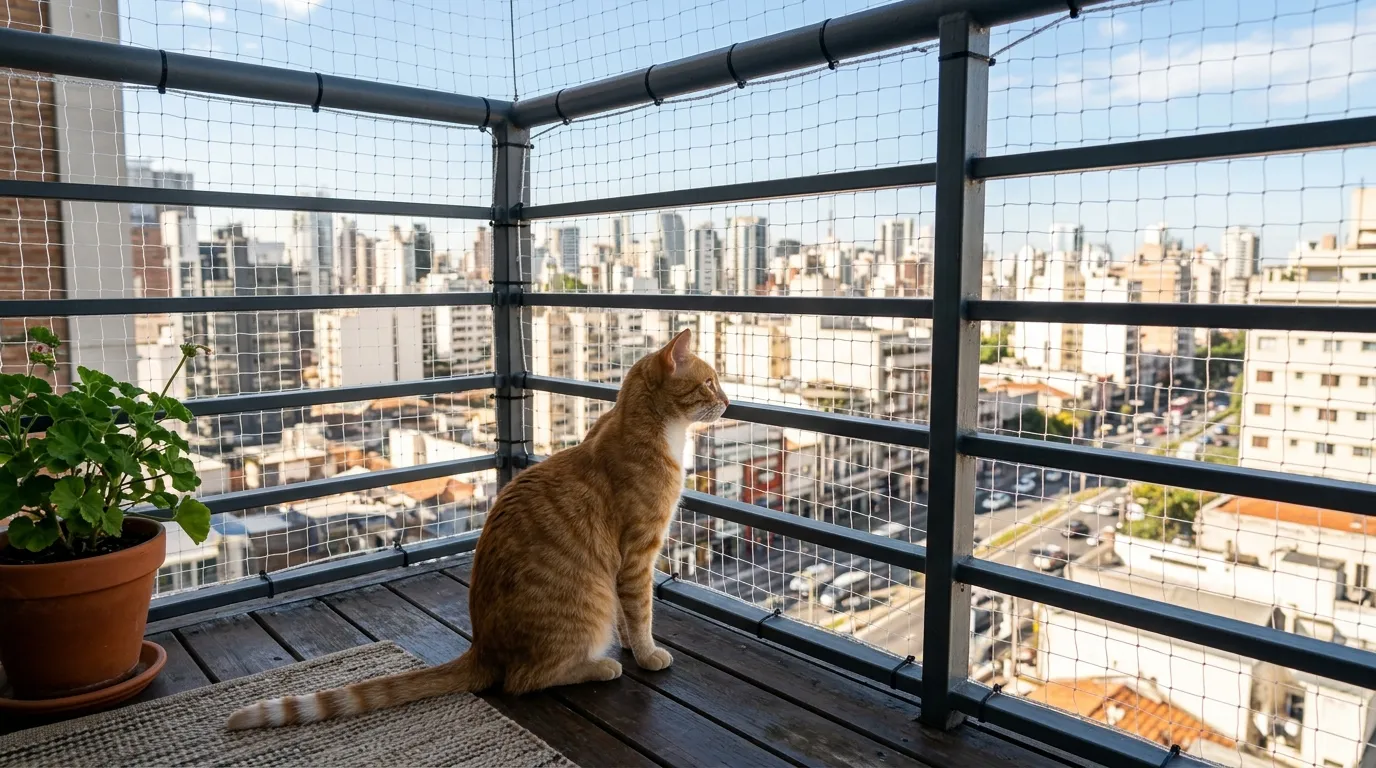
Short answer
High-rise syndrome describes cats falling from windows and balconies, and veterinary evidence shows that cats on very high floors don't fall less: they fall just as often or more, because a cat chasing a bird or an insect isn't calculating the real height. The only reliable protection is physical: mesh properly anchored on every edge, not trust in the cat's balance.
It’s known as high-rise syndrome in the veterinary literature, and it describes something quite specific: cats falling from windows or balconies in tall buildings, usually while chasing something or losing their footing, not jumping on purpose.
Why higher floors aren’t safer
Intuition says a third floor is more dangerous than a tenth floor, because “there’s less time to react” lower down. Veterinary evidence points the other way, or at least doesn’t confirm that intuition:
- The righting reflex (the cat twisting its body to land feet-first) needs a minimum falling distance to complete. Too low, and it doesn’t fully engage.
- Some studies report more severe injuries from mid-range falls than from very high ones, possibly because at greater height the cat has time to fully relax its body before impact, which reduces certain fractures.
- Landing on its feet never means landing without injury. Jaw, chest and limb fractures are common in both scenarios.
The practical conclusion: no floor is safe without physical protection. There is no height “too low to worry about” and none “too high for it to matter”.
What to look for in physical protection
DIY window mesh, cut to size
What to look for: A dense, sturdy mesh cut to the exact size of your window or balcony, firmly anchored on all four edges. It is not designed to bear a cat's weight from a running jump: it is a barrier against passing through, not a structural containment element.
-
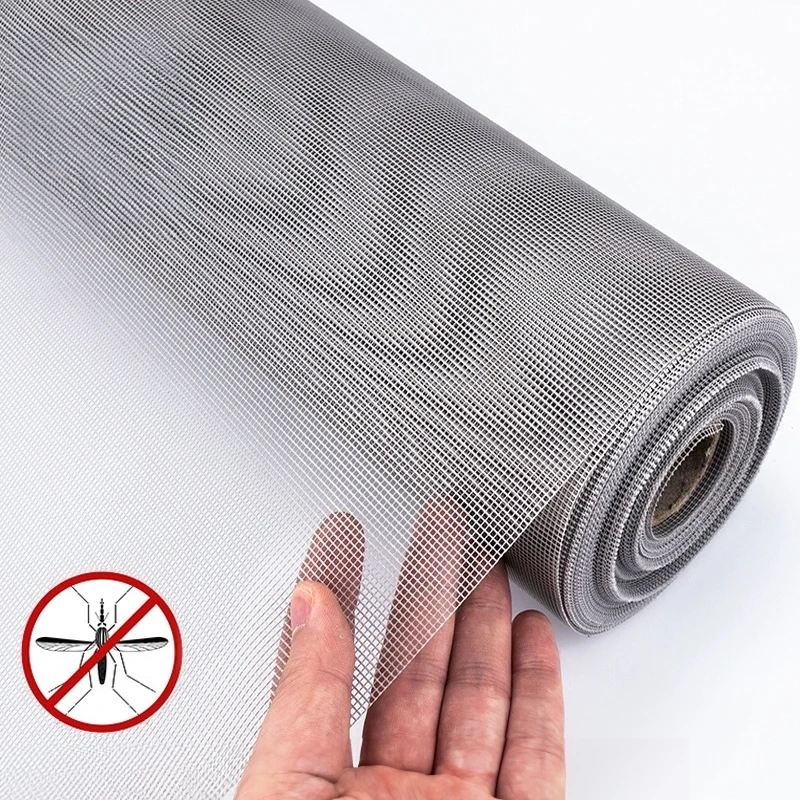 View on AliExpress Ships internationally · checked on 2026-08-28
 -
 View on Mercado Libre Available in Chile · checked on 2026-08-27
- Dense, sturdy mesh, not a fine screen meant only for insects. The material needs to bear the weight and momentum of a jump, not just a gentle lean.
- Anchoring on all four edges, not just the top. A cat pushing against the mesh will find the weak point if the frame isn’t fixed all the way around.
- An exact fit for your window or balcony, no gaps at the corners or loose overlaps. Measure twice before cutting or ordering the size.
- Regular checks on the anchoring, especially on balconies exposed to sun and rain, where material and fasteners degrade over time.
Where to check, window by window
Common risk points in flats
| If your situation is… | Works well | Better avoided |
|---|---|---|
| Window with a thin sliding screen | Replace or reinforce with a sturdier mesh | Trusting the factory screen to hold a jump's weight |
| Balcony with a spaced-baluster railing | Continuous mesh covering the whole opening, anchored to the frame | Leaving gaps between balusters wide enough for the cat to fit its head through |
| A window that opens outward with no protection | Stops limiting the opening to a safe width, in addition to the mesh | Leaving it fully open with no physical limit at all |
| A terrace overlooking a courtyard or the street | Treat it exactly like a balcony: same risk, same standard of protection | Assuming "it's just a courtyard" lowers the real risk of the fall |
What does not replace physical protection
- “My cat has never shown interest” in the window. The trigger is usually a bird, an insect or a sudden noise, not a prior pattern.
- Watching it while it’s at the window. A few seconds of distraction is enough, and nobody watches 24 hours a day.
- Closing the window “almost always”. The “almost” is exactly when the incident happens.
When to see a vet immediately
If your cat falls from any height, even if it seems fine, contact your veterinarian the same day. Laboured breathing, pale gums, limping, nasal or dental bleeding, or simply unusual stillness are signs the injury may be more serious than it looks from the outside.
Frequently asked questions
Is it true cats always land on their feet and don't get hurt?
The righting reflex exists, but it doesn't prevent fractures, internal injuries or death. Veterinary studies document severe injuries even from multi-storey falls, and the reflex needs a minimum falling distance to fully engage.
Is an 8th floor more dangerous than a 3rd floor?
Not necessarily less: some studies report more severe injuries from mid-range falls than from very high ones, possibly because the cat doesn't have time to fully reorient. No floor is 'safe' without physical protection.
Does a regular window screen protect my cat?
Not always. Many screens are designed to stop insects, not the weight and momentum of a cat jumping or pushing against it hard. Check that the mesh and anchoring are rated to bear that load.
What if my cat has never shown interest in jumping?
The risk doesn't depend on a prior attempt. A passing bird, a sudden noise, or simply losing balance while stretching can be enough. Protection goes up before the first incident, not after.