Ramps for older or small dogs: when they're actually worth it
Repeatedly jumping onto the sofa or bed wears down joints over time. When a ramp makes sense, what to check before buying one, and how to teach your dog to use it.
Short answer
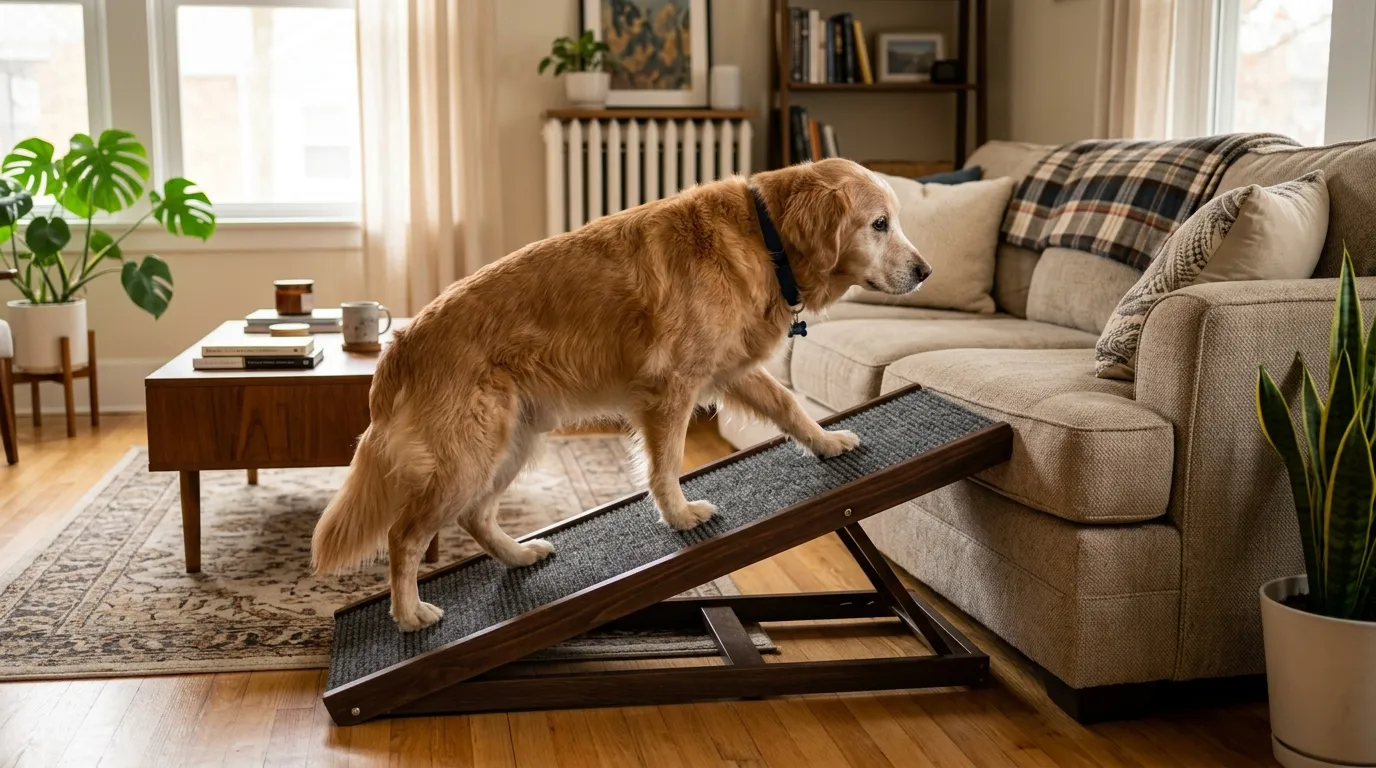
Jumping to and from the sofa or bed creates repeated impact on the joints that, over the years or in small dogs, puppies, or dogs with dysplasia, can promote wear. A ramp with non-slip steps reduces that impact, but only if the dog actually uses it: many need to be taught to climb it instead of jumping.
A dog that jumps onto the sofa a hundred times a month for years builds up joint impact that doesn’t show overnight, but does show up over the years, especially in short-legged small breeds or dogs predisposed to spinal issues.
The impact you don’t see right away
Every jump and every landing transmits direct force to the front leg joints and the spine. In growing puppies, in breeds with proportionally short legs, or in older dogs with early arthritis, that repeated impact can speed up wear.
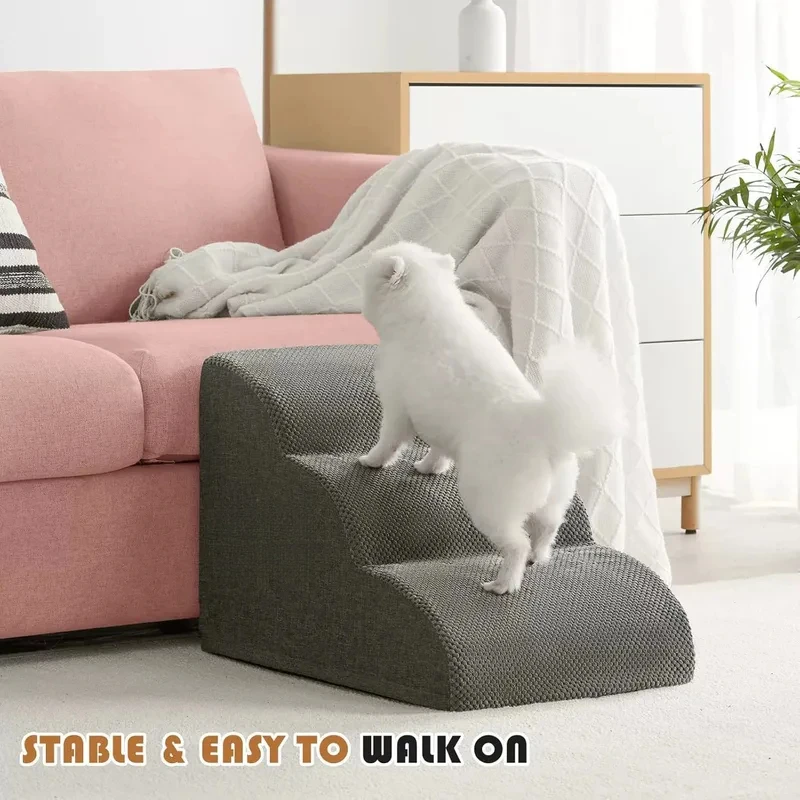
Foldable side ramp/steps for small and older dogs
What to look for: A ramp with non-slip steps that reduces the impact of jumping to or from the sofa or bed, designed for small dogs, puppies, or older dogs with sensitive joints. Check the declared maximum weight before buying for medium or large breeds.
-
 View on AliExpress Ships internationally · checked on 2026-09-02
 -
 View on Mercado Libre Available in Chile · checked on 2026-08-27
When a ramp is worth it
Who benefits most from a ramp
| If your situation is… | Works well | Better avoided |
|---|---|---|
| An older dog showing stiffness or arthritis signs | A ramp as a priority, alongside a vet evaluation | Continuing to allow free jumping with no help at all |
| A growing large-breed puppy | Limit high jumps while growth plates are still open | Encouraging repeated jumps "just because it can" |
| A short-legged small breed (dachshund, corgi) | A ramp from a young age, before symptoms appear | Waiting until there's pain to act |
| A healthy adult medium-breed dog with no history | Not a priority, though it doesn't hurt either | Assuming every healthy dog needs it equally |
How to teach your dog to use it
- Don’t force the dog up. Guide it with treats, step by step, letting it explore the ramp at its own pace.
- Place treats on the ramp itself at first, so it associates climbing it with something positive.
- Practice several times a day, in short sessions, until it uses it without needing a treat every time.
- Be patient: some dogs learn in days, others need weeks of consistent practice.
Frequently asked questions
At what age does a ramp become worth it?
There's no fixed age; it depends on breed and weight. In large breeds prone to dysplasia, it's worth it from a young age. In small breeds, it usually becomes relevant only in old age.
How do I teach my dog to use the ramp instead of jumping?
With treats: guide the dog onto the ramp step by step using treats, without forcing it, until it associates the ramp with reaching its favorite spot. It takes days or weeks, not a single attempt.
Does it work for large breeds too?
It depends on the maximum weight the manufacturer declares. Many ramps are designed for small or medium dogs; check the listing before buying if your dog is large.
Does it replace treatment for diagnosed dysplasia?
No. It reduces the impact of one specific movement (jumping), but it doesn't treat the underlying condition. Follow your veterinarian's guidance for full management.