Why your dog needs nose-work play
Nose work tires a dog out mentally faster than a long walk. What a snuffle mat is, how to start without frustrating the dog, and signs it's time to lower the difficulty.
Short answer
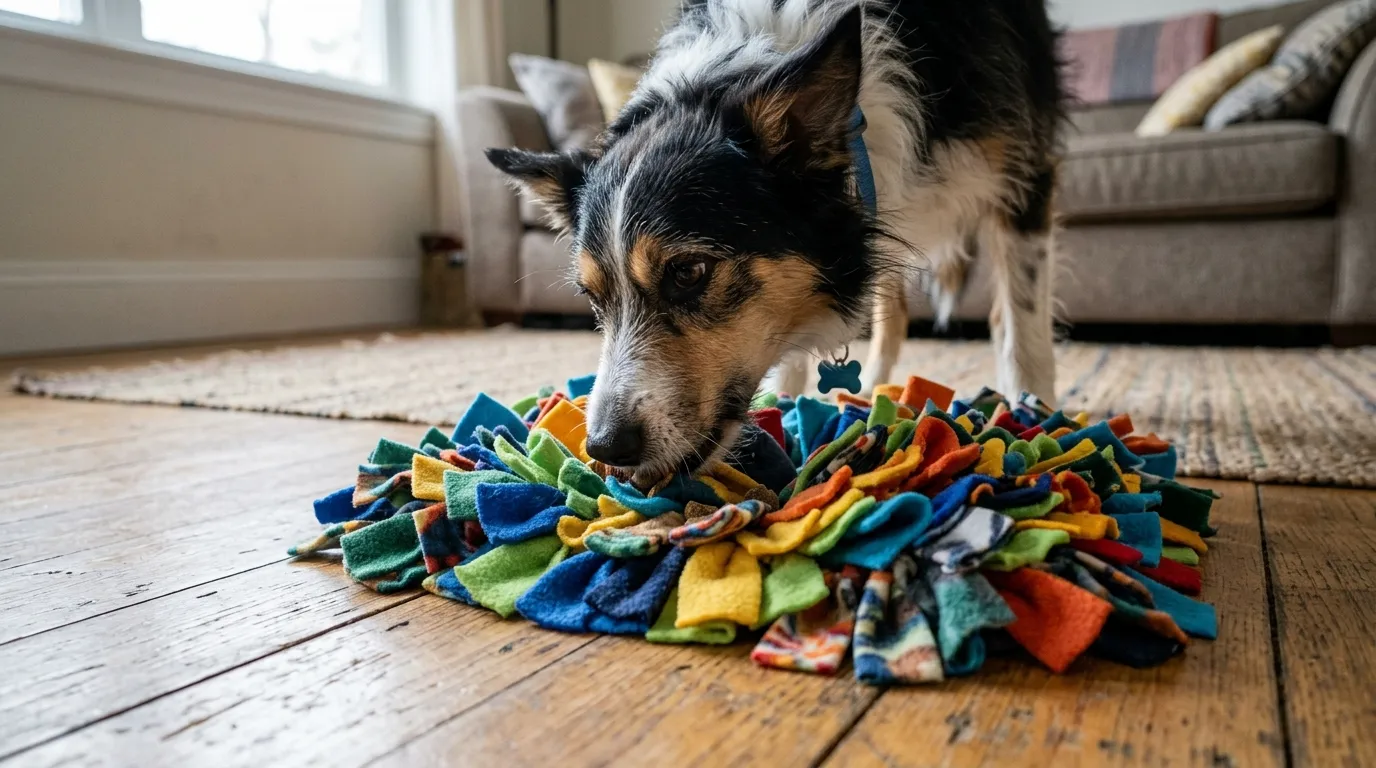
A dog uses a huge part of its brain processing smells, and searching for hidden food tires it out mentally more than running does. Nose work is real enrichment, not just a toy: a few minutes hunting for treats in a snuffle mat can tire out an anxious or bored dog more than a walk twice as long.
When a dog seems “bored” at home, the usual reaction is to take it on a longer walk. But a dog that runs for 40 minutes and is still restless when it gets back probably didn’t need more physical exercise: it needed to use its nose.
Why nose work tires differently
A dog’s olfactory bulb is proportionally much larger than a human’s, and processing smells consumes mental energy in a way similar to solving a problem. Searching for hidden food activates the same circuit as hunting: tracking, deciding where to keep going, confirming the find. That cycle tires a dog out quickly, and differently than trotting in a straight line.
That’s why a dog that “burns off plenty of energy” running at the park can still be pacing around the living room afterward: it ran, but it didn’t think.
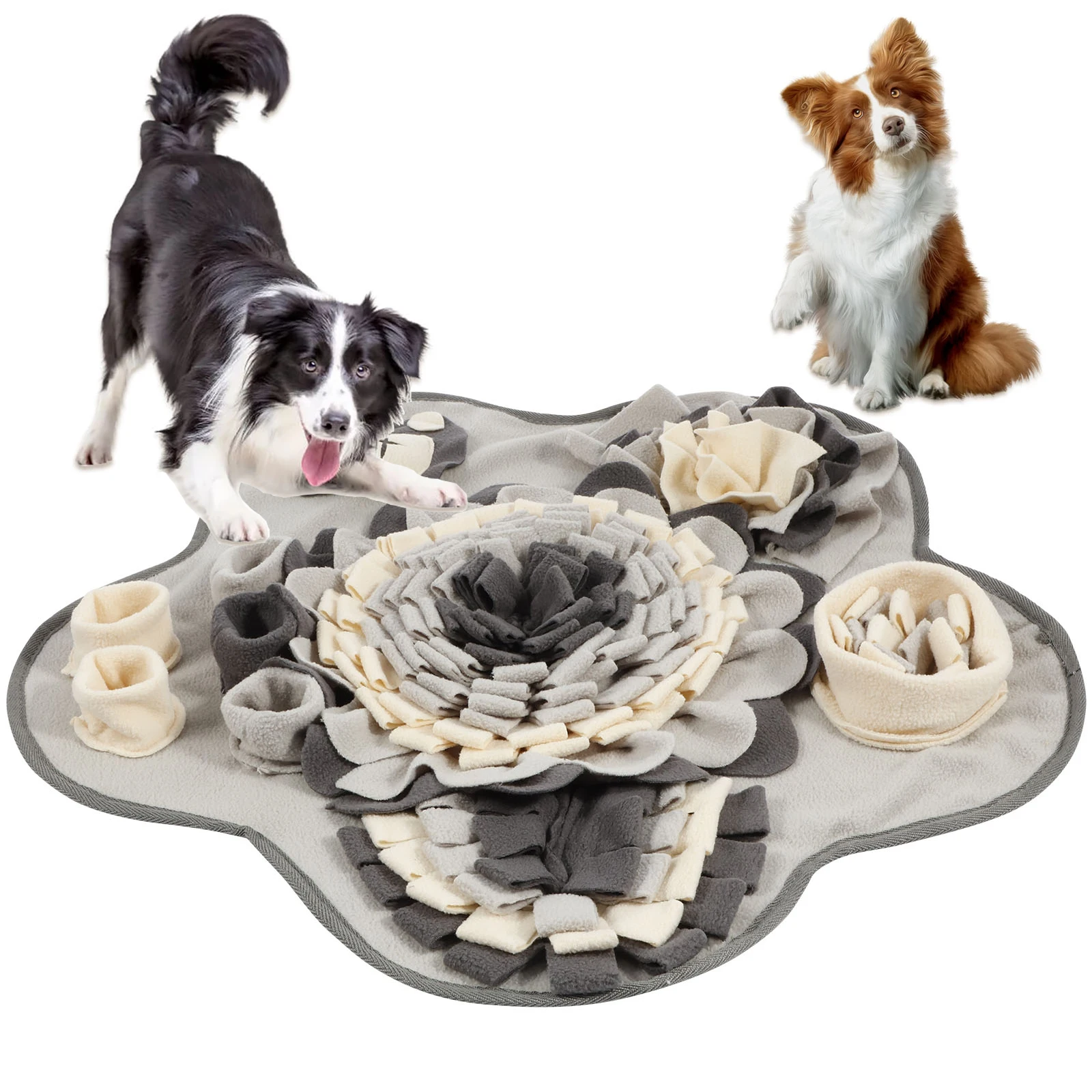
Snuffle mat for dogs, 64x43 cm
What to look for: A felt surface with textures and pockets for hiding treats, so the dog uses its nose instead of eating straight from a bowl. Check that the fabric pieces are sewn, not just glued, and pick a size that matches the dog: a small mat falls short for medium or large breeds.
-
 View on AliExpress Ships internationally · checked on 2026-08-30
 -
 View on Mercado Libre Available in Chile · checked on 2026-08-27
How to start without frustrating the dog
- Start easy. For the first few days, leave some treats in plain sight on the mat so the dog understands there’s food there.
- Raise the difficulty gradually. Only once it searches confidently, start hiding more treats between the fabric folds.
- Use part of its daily food, not only extra treats, so the session doesn’t add extra calories.
- Keep sessions short. Five to ten minutes are enough; mental tiredness doesn’t need long sessions to show.
What to check before buying one
- Sturdy stitching, not pieces that are only glued: a dog that bites at the fabric with its paws will destroy a poorly assembled one fast.
- Size that matches the dog. A small mat falls short for medium or large breeds; use the width of its shoulders as a minimum reference.
- Machine-washable material. It will end up smelling like hidden food, and you need to be able to wash it without it losing shape.
Signs it’s time to lower the difficulty
- The dog sniffs once and walks away without continuing to search.
- It starts biting or pulling at the fabric instead of searching with its nose.
- It gets frustrated and barks instead of continuing to try.
Any of these signs means going back a step, not pushing through at the same difficulty.
Frequently asked questions
Does it work for any age of dog?
Yes, including puppies and older dogs with reduced mobility, because the effort is mental and barely physical. In older dogs it also helps keep the mind active.
Does it replace the daily walk?
No. It covers a different need, the mental one, not the need to move, socialize, and go outside. They complement each other, they don't substitute for one another.
My dog gets frustrated and gives up after 30 seconds, what do I do?
Lower the difficulty: use bigger or smellier treats at first, and leave some in plain sight so the dog understands the mechanic before you hide everything.
Can I do this without buying anything?
Yes, with a rolled towel, cardboard boxes, or the three-cup method. A mat is just easier to wash and harder to destroy, not a requirement.